Carbon Taxes Go Global: How the EU's Climate Tariffs Are Sparking an Economic Revolution
Swagoto Chatterjee·6 min


 ➽ Fintechs have gotten aggressive in their approach of increasing their global footprint with mergers, acquisitions & partnerships - specially the European unicorns of Monzo, Revolut, and N26 which have established operational plans for the U.S in 2019. Digital banks have blossomed under the friendly regulation environment in Europe with GDPR & PSD2 guiding the way.
➽ The above mentioned M&A and partnerships have led the Fintechs to broaden the scope of their services beyond their initial niches. Below is the list of some of the Fintech startups which started off with a promising use case & ended up expanding into other lines of services.
Revolut (digital wallet) → Crypto trading, Brokerage services & Bank accounts
Wealthfront (robo-advisor) → College savings plan, Real estate investment, smart lending
Acorns (micro investing) → Wealth management, Bank accounts
Robinhood (brokerage) → Crypto trading, Margin investing, Bank accounts
MoneyLion (personal finance) → Wealth management, Smart lending, Bank accounts
Coinbase (crypto trading) → Institutional investing, Index investing, Wealth management
➽ Fintechs have gotten aggressive in their approach of increasing their global footprint with mergers, acquisitions & partnerships - specially the European unicorns of Monzo, Revolut, and N26 which have established operational plans for the U.S in 2019. Digital banks have blossomed under the friendly regulation environment in Europe with GDPR & PSD2 guiding the way.
➽ The above mentioned M&A and partnerships have led the Fintechs to broaden the scope of their services beyond their initial niches. Below is the list of some of the Fintech startups which started off with a promising use case & ended up expanding into other lines of services.
Revolut (digital wallet) → Crypto trading, Brokerage services & Bank accounts
Wealthfront (robo-advisor) → College savings plan, Real estate investment, smart lending
Acorns (micro investing) → Wealth management, Bank accounts
Robinhood (brokerage) → Crypto trading, Margin investing, Bank accounts
MoneyLion (personal finance) → Wealth management, Smart lending, Bank accounts
Coinbase (crypto trading) → Institutional investing, Index investing, Wealth management
 ➽ Apart from diversifying the services to other segments of the financial services. The Fintechs are leading a movement to replace the old guard of brick & mortar banks with digital-only banks by applying for charters & licenses with the regulators. In the U.S, Green dot & Cambr launched something called the Banking-as-a-service platforms which facilitate third-party Fintechs to provide digital bank services to their clients. While others like NU bank, Varo, Zopa, Xinja & Revolut have also applied for banking licenses in various jurisdictions. Revolut is the most active member of this list which has already gotten banking licenses from Europe & Lithuania & is now looking to spread its services Singapore & Japan.
➽ The initial confusion & friction between the regulators and the Fintechs has transitioned into a building of partnerships. This has also been made possible with the emergence of RegTech regimes. Global regulatory regimes have been shifting their focus to promoting innovation & lowering barriers, bringing new products & services for the tech-savvy customers and breaking the monopolies of the traditional banks. Not to mention the fact the creation of regulatory sandbox has resulted in the development of RegTech tools, which not only adhere to compliance guidelines while monitoring transactions of these Fintechs, but also work as an early warning system to spot irregularities, potential threats & fraudulent transactions in the digital payment universe. The real-time reporting of these problems to the FinTech companies means that the problems can be rectified in a timely & efficient manner. It is important to note, however, that with access to Open banking APIs the Fintechs will eventually need to have in-house regulatory teams who can work with the regulators.
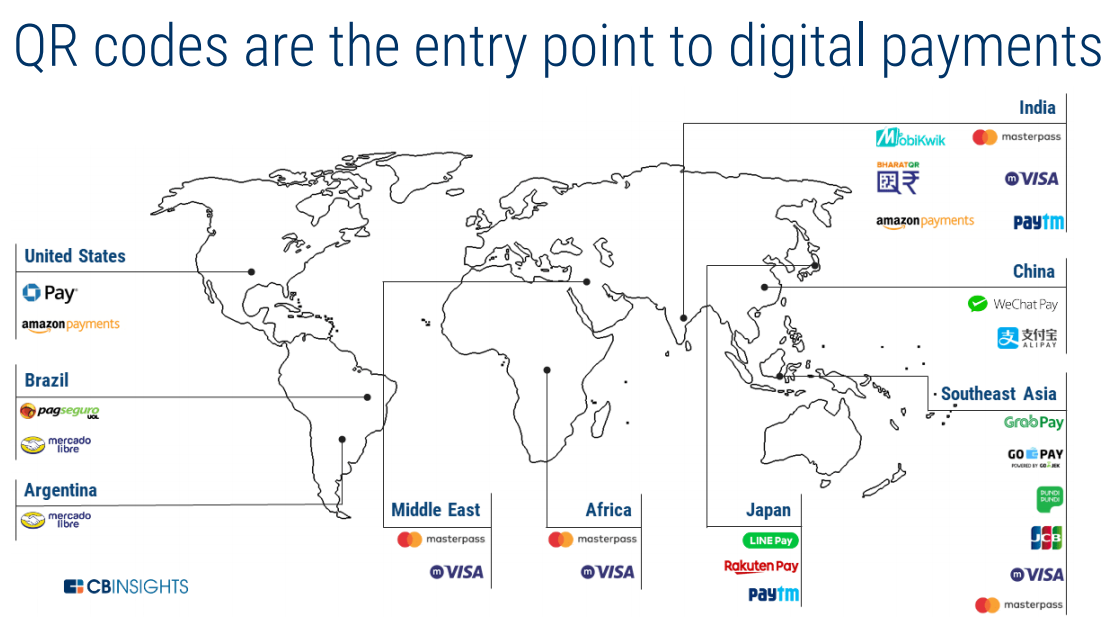
➽ 2018 was a bumper year for Fintech deals in South East Asia with record funding, up 143% YOY with the region attracting bigger investments from foreign investors. No doubt the region has become the hotbed of Fintech activity with companies like Alipay and WeChat leading China's transition to a cashless economy. Popular Japanese messaging app Line is planning to build an ecosystem in the country based on the Alipay/WeChat Pay model. Meanwhile in South America, Argentinian e-Commerce player MercadoLibre is expanding its business QR code payments to facilitate the off payment channels which account for 30% of its total business volume. The Fintech operates a loan business & also plans to launch an investment fund for potential investors.
➽ Apart from diversifying the services to other segments of the financial services. The Fintechs are leading a movement to replace the old guard of brick & mortar banks with digital-only banks by applying for charters & licenses with the regulators. In the U.S, Green dot & Cambr launched something called the Banking-as-a-service platforms which facilitate third-party Fintechs to provide digital bank services to their clients. While others like NU bank, Varo, Zopa, Xinja & Revolut have also applied for banking licenses in various jurisdictions. Revolut is the most active member of this list which has already gotten banking licenses from Europe & Lithuania & is now looking to spread its services Singapore & Japan.
➽ The initial confusion & friction between the regulators and the Fintechs has transitioned into a building of partnerships. This has also been made possible with the emergence of RegTech regimes. Global regulatory regimes have been shifting their focus to promoting innovation & lowering barriers, bringing new products & services for the tech-savvy customers and breaking the monopolies of the traditional banks. Not to mention the fact the creation of regulatory sandbox has resulted in the development of RegTech tools, which not only adhere to compliance guidelines while monitoring transactions of these Fintechs, but also work as an early warning system to spot irregularities, potential threats & fraudulent transactions in the digital payment universe. The real-time reporting of these problems to the FinTech companies means that the problems can be rectified in a timely & efficient manner. It is important to note, however, that with access to Open banking APIs the Fintechs will eventually need to have in-house regulatory teams who can work with the regulators.
➽ 2018 was a bumper year for Fintech deals in South East Asia with record funding, up 143% YOY with the region attracting bigger investments from foreign investors. No doubt the region has become the hotbed of Fintech activity with companies like Alipay and WeChat leading China's transition to a cashless economy. Popular Japanese messaging app Line is planning to build an ecosystem in the country based on the Alipay/WeChat Pay model. Meanwhile in South America, Argentinian e-Commerce player MercadoLibre is expanding its business QR code payments to facilitate the off payment channels which account for 30% of its total business volume. The Fintech operates a loan business & also plans to launch an investment fund for potential investors.
 ➽ Just like Blockchain has brought the concept of decentralization, Fintechs are creating New & Alternative models by democratizing the field of investing. This has been achieved in three waves:
Faisal is based in Canada with a background in Finance/Economics & Computers. He has been actively trading FOREX for the past 11 years. Faisal is also an active Stocks trader with a passion for everything Crypto. His enthusiasm & interest in learning new technologies has turned him into an avid Crypto/Blockchain & Fintech enthusiast. Currently working for a Mobile platform called Tradelike as the Senior Technical Analyst. His interest for writing has stayed with him all his life ever since started the first Internet magazine of Pakistan in 1998. He blogs regularly on Financial markets, trading strategies & Cryptocurrencies. Loves to travel.